
Twentieth Century Modern Masters
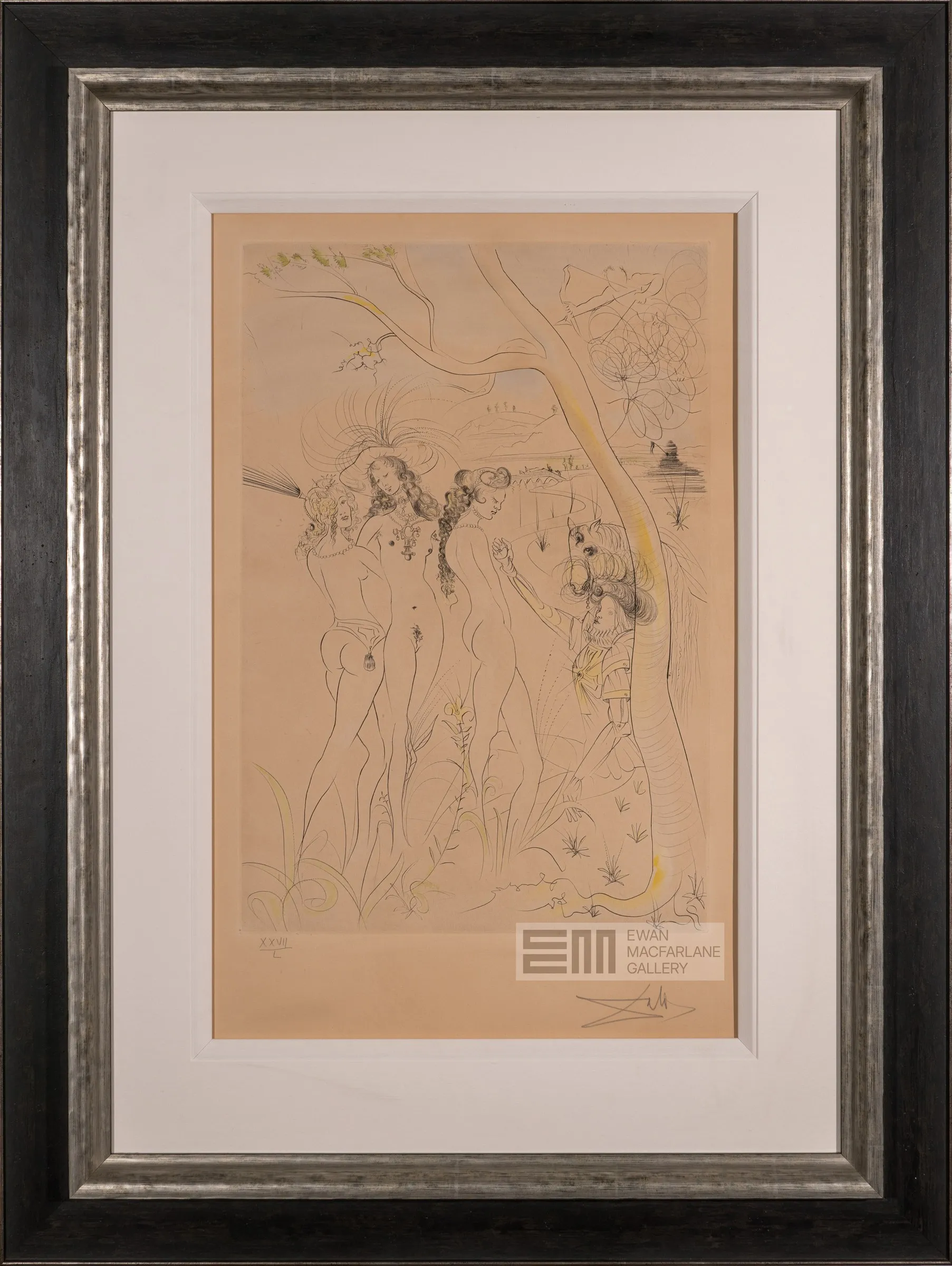
Le Jugement de Pâris (The Judgement of Paris)
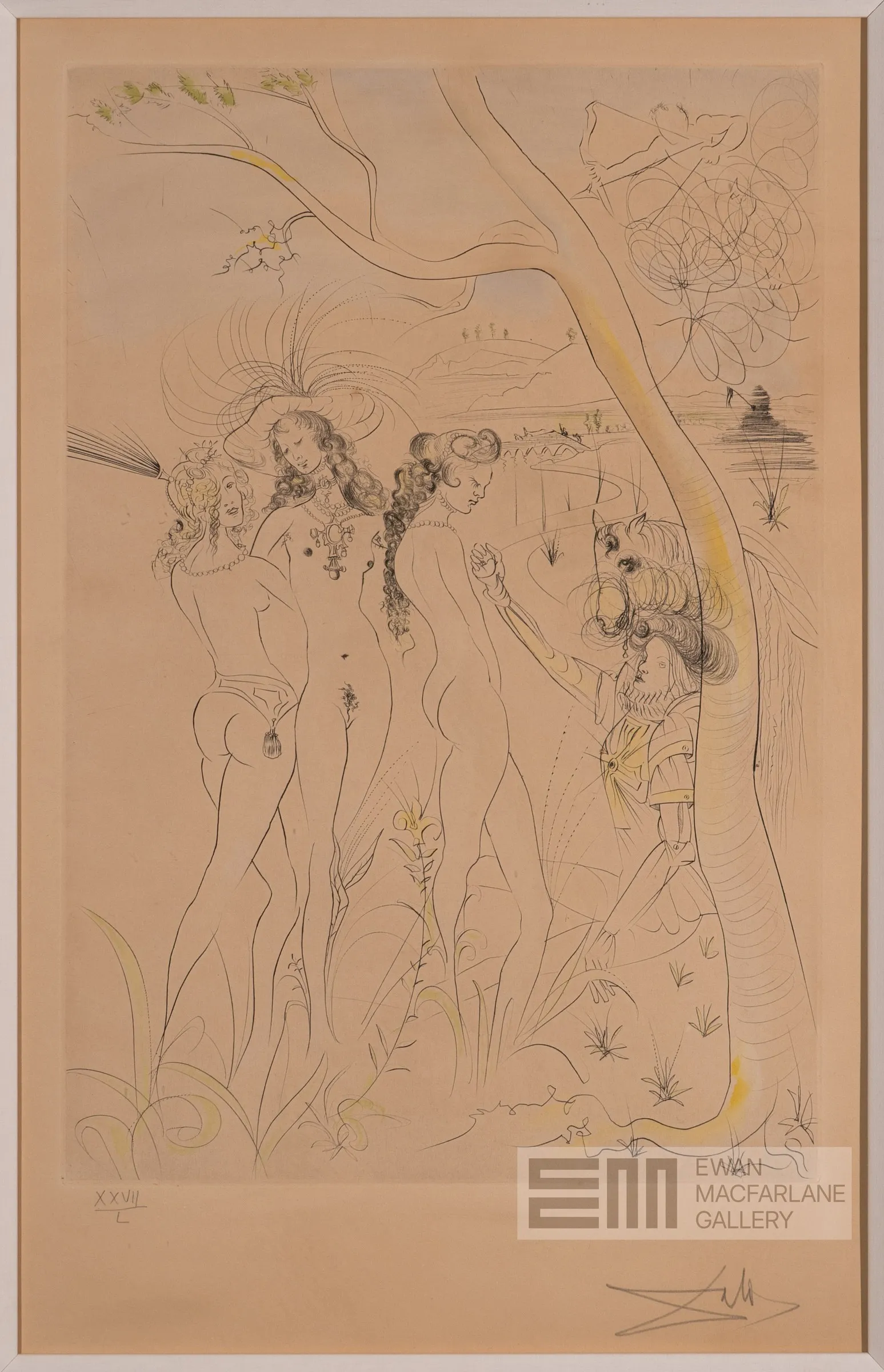
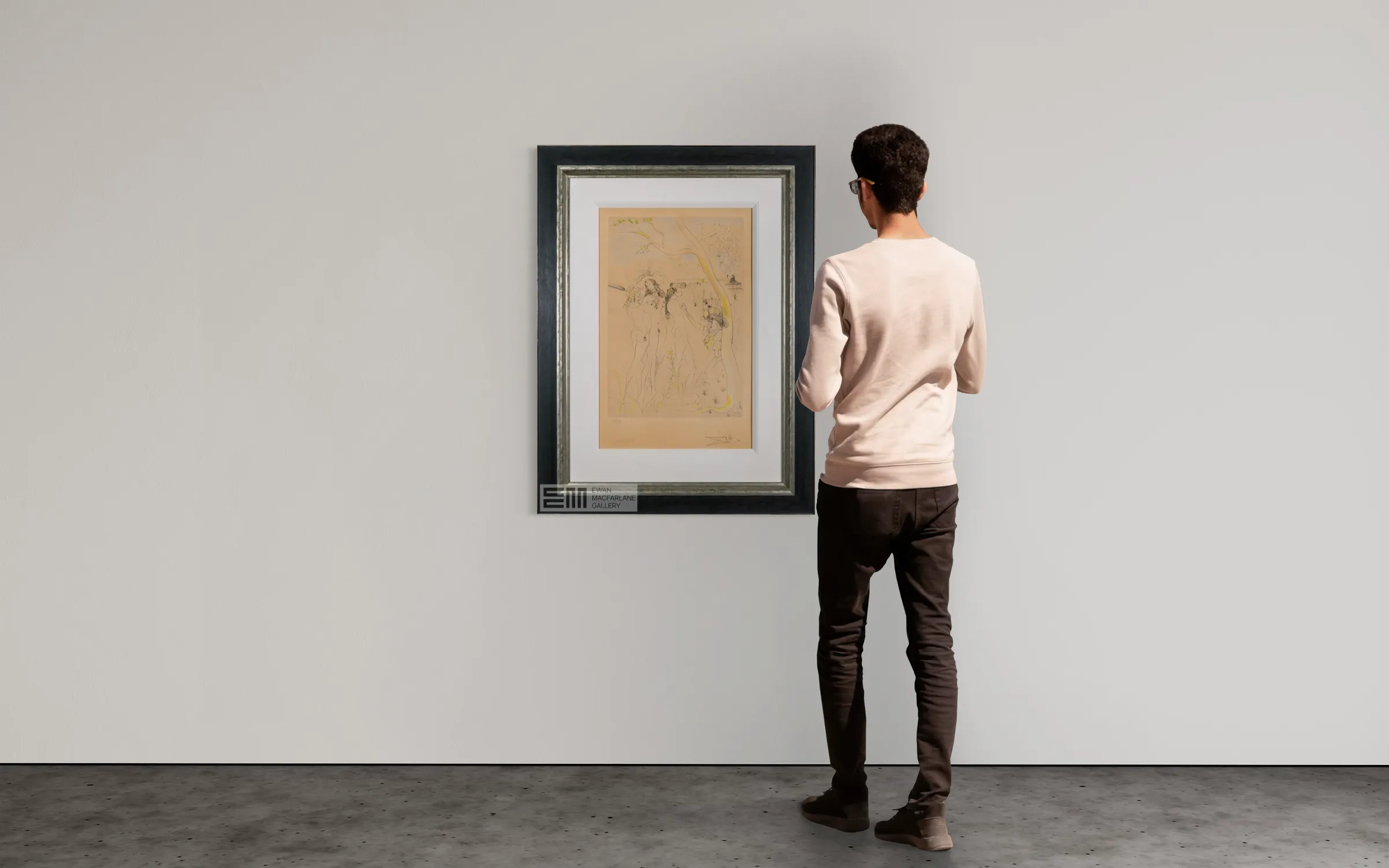
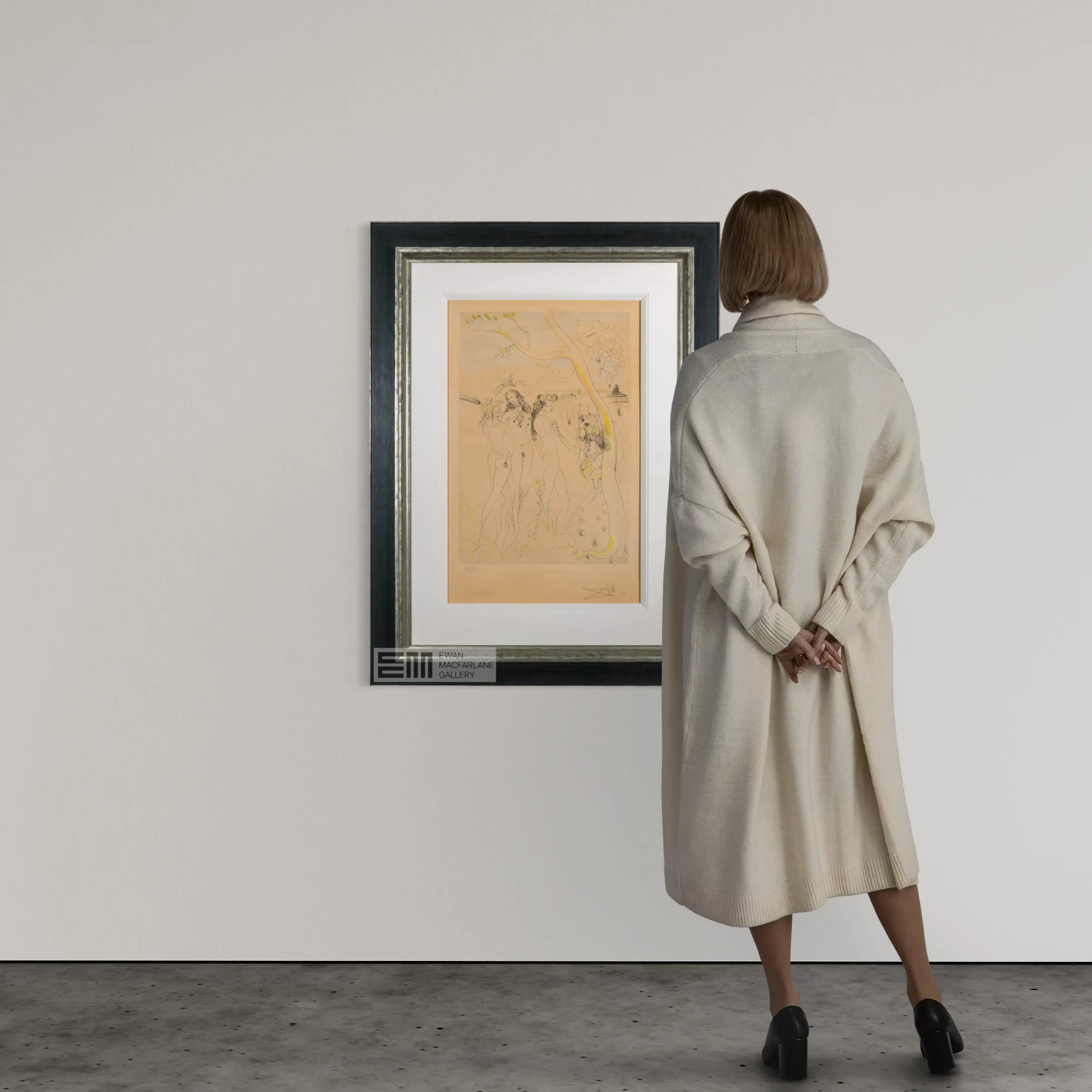
In Le Jugement de Pâris, Salvador Dalí returns to one of the great narratives of classical mythology and transforms it through the unmistakable language of Surrealism. Three elongated goddesses dominate the composition while Paris appears comparatively small beside the tree, with fine spontaneous lines and restrained touches of yellow and green allowing recognisable forms to dissolve into something dreamlike and psychologically charged.
Dalí combined drypoint and etching, drawing into a metal plate so that its incised lines would hold ink and produce the delicate yet expressive marks that animate the figures and landscape. Pochoir colour was then applied through stencils, with yellow following the tree and passing intermittently across the figures while touches of green enliven the upper branches without overwhelming the drawing.
Paris was asked to judge which of Hera, Athena and Aphrodite was the most beautiful, and chose Aphrodite after she promised him the love of Helen of Sparta, a decision that ultimately set the Trojan War in motion. Dalí avoids a reverential retelling: the goddesses become elegant, sensual and strange, Paris seems almost theatrical, and the great tree anchors a composition that shifts continually between mythology, observation and dream.
Le Jugement de Pâris belongs to Dalí’s Suite mythologique nouvelle of 1971, in which figures and narratives inherited from antiquity are filtered through the imagery and freedoms of twentieth-century Surrealism. Different portions of the edition were deliberately distinguished by paper, numbering and sometimes colouring, making the Roman-numeral impressions on Richard de Bas paper a clearly identifiable part of the publication history. The composition is recorded as Michler and Löpsinger 485 and Albert Field 71-8-F, confirming its recognised place within Dalí’s graphic oeuvre; it also reflects the artist’s sustained engagement with cultural sources extending from classical mythology and the Bible to Dante and Cervantes, subjects through which he repeatedly reimagined European artistic tradition.
This impression is numbered XXVII/L, identifying it as number 27 from the separate edition of only fifty Roman-numeral impressions on handmade Richard de Bas paper, and it is signed by Dalí in pencil at the lower right. Its lifetime production, small edition, established catalogue raisonné references and impressive scale give it particularly strong credentials within Dalí’s extensive graphic oeuvre.
“Begin by drawing like the old masters. After that, do as you see fit.”
— Salvador Dalí
Why This Work Matters
This impression is numbered XXVII/L, identifying it as number 27 from the separate edition of only fifty Roman-numeral impressions on handmade Richard de Bas paper, and it is signed by Dalí in pencil at the lower right. Its lifetime production, small edition, established catalogue raisonné references and impressive scale give it particularly strong credentials within Dalí's extensive graphic oeuvre. This is an especially appealing example of Dalí as both draughtsman and printmaker, relying on the fluency of his line rather than the melting clocks and fantastical landscapes associated with his earlier Surrealism.
Catalogue Entry
- Artist
- Salvador Dalí (1904–1989)
- Title
- Le Jugement de Pâris (The Judgement of Paris)
- Date
- 1971
- Medium
- Drypoint and etching with pochoir colour
- Support
- Richard de Bas handmade paper
- Signature
- Hand-signed by Dalí in pencil, lower right
- Edition
- XXVII/L; one of 50 Roman-numeral impressions
- Sheet dimensions
- Approximately 79 × 57.5 cm
- Image dimensions
- Approximately 58.5 × 39 cm
- Framed dimensions
- 105 × 79 cm
- Printer
- Ateliers Rigal, Paris
- Publisher
- Mouret / Vision Nouvelle, Paris
- Literature
- Michler and Löpsinger 485; Albert Field 71-8-F
- Reference
- 410
£3,000
Sold
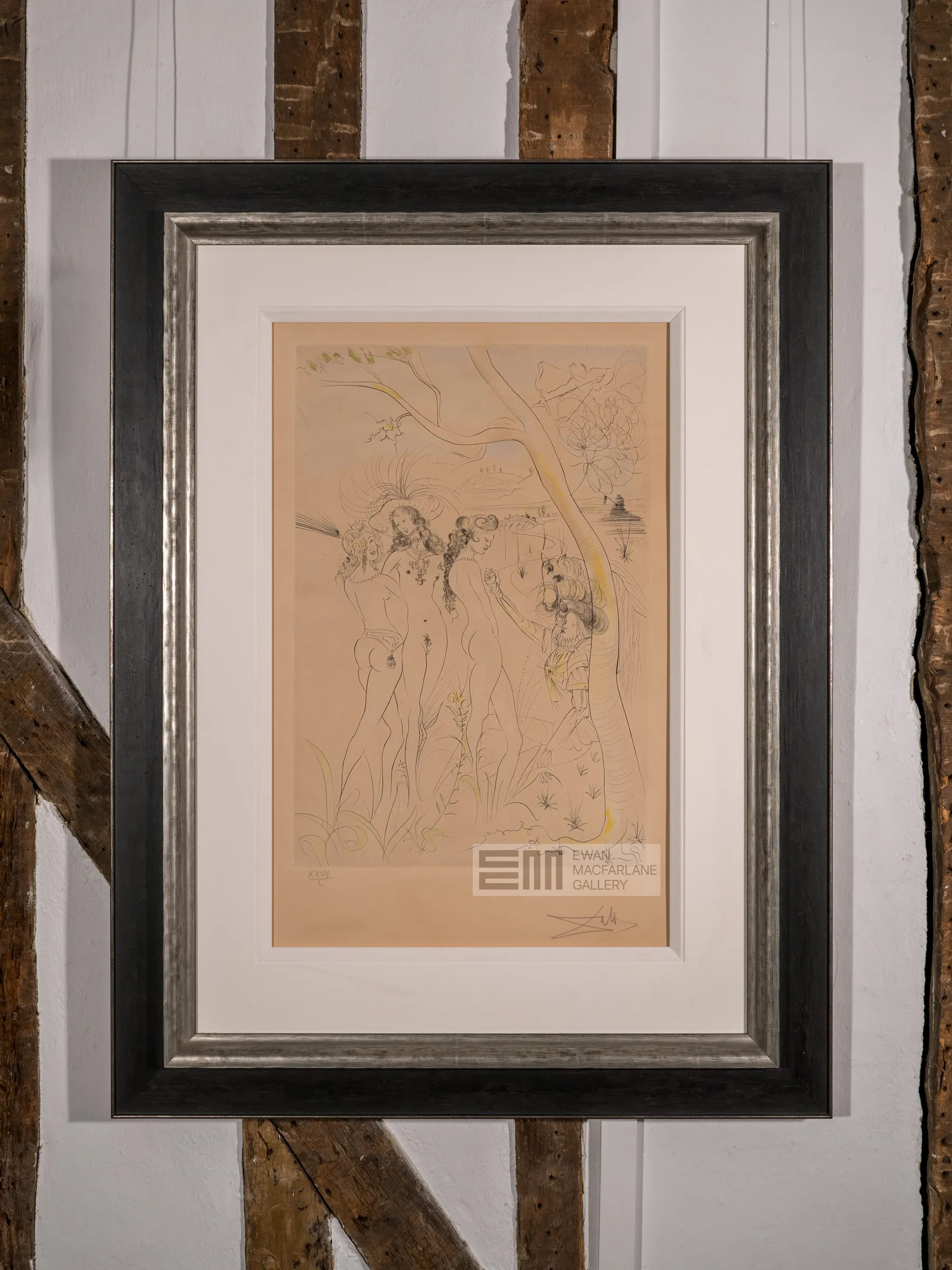
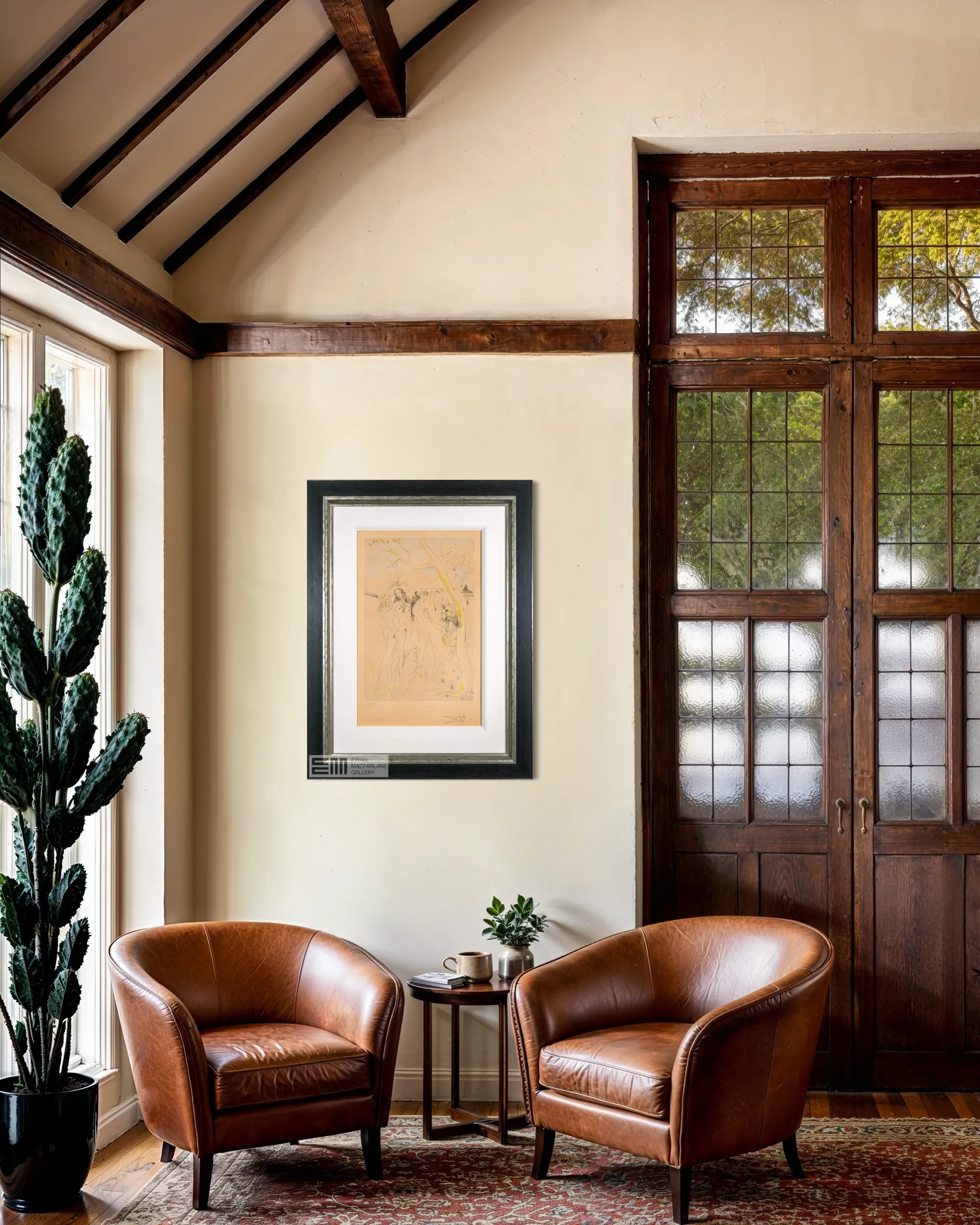
Unframed sheet