
Salvador Dalí
Salvador Dalí (1904–1989) was a Spanish artist whose extraordinary imagination and meticulous technique made him one of the defining figures of Surrealism. His paintings bring dreams and the subconscious into sharp focus, combining precisely rendered forms with unexpected transformations and the distinctive landscapes of his native Catalonia.
Born in Figueres, Dalí developed a visual language of melting clocks, elongated shadows and ambiguous images that challenged conventional perceptions of reality. Works such as The Persistence of Memory (1931) reflect his enduring fascination with time, memory and the instability of appearances.
His creativity extended beyond painting to drawing, sculpture, printmaking, film and design. In his graphic work, literary classics, mythology and religious subjects offered rich opportunities for invention. Across these varied media, Dalí united an admiration for the Old Masters with a restless appetite for experimentation, creating an artistic legacy that continues to engage audiences and collectors around the world to this day.
Available Artworks
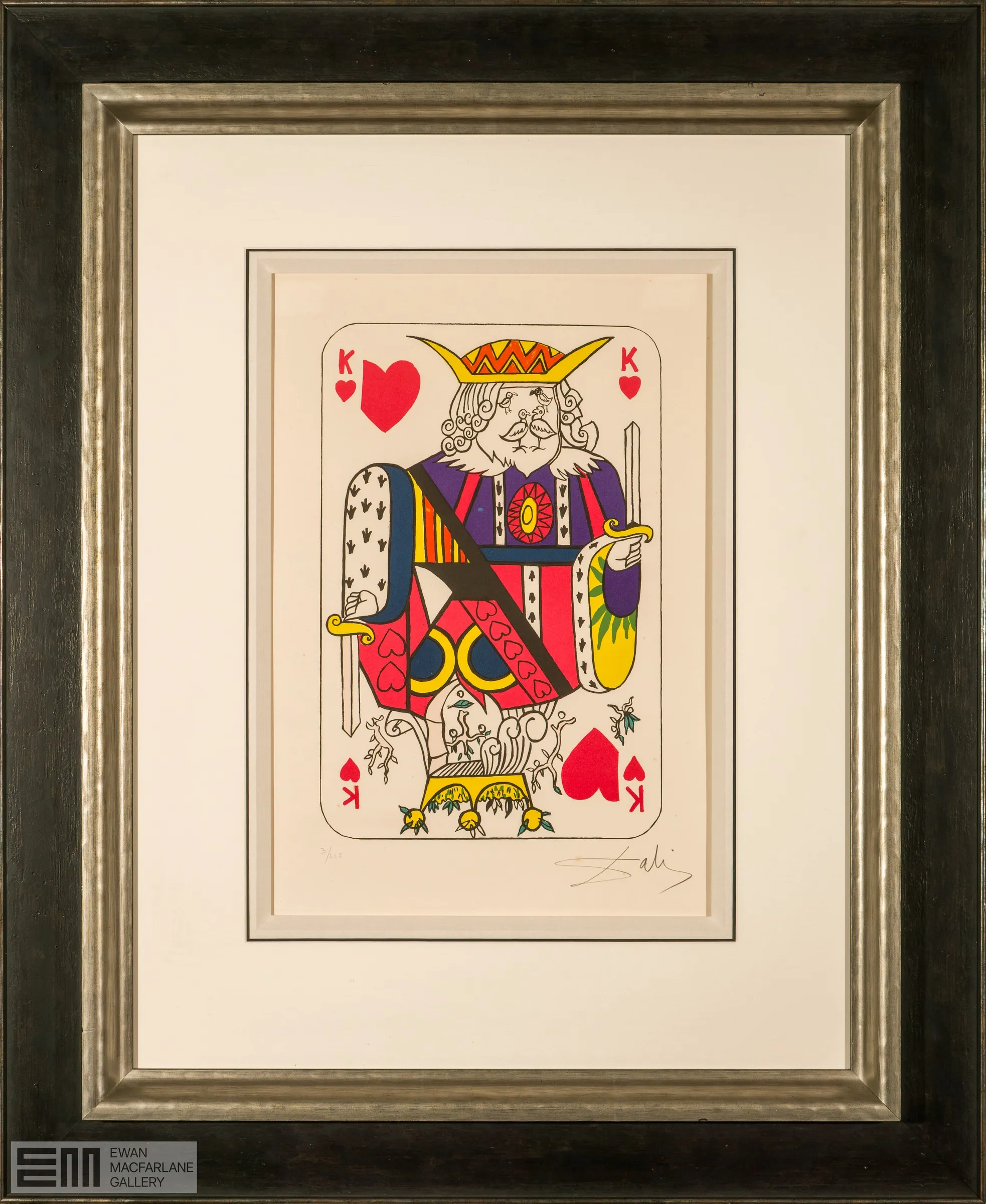
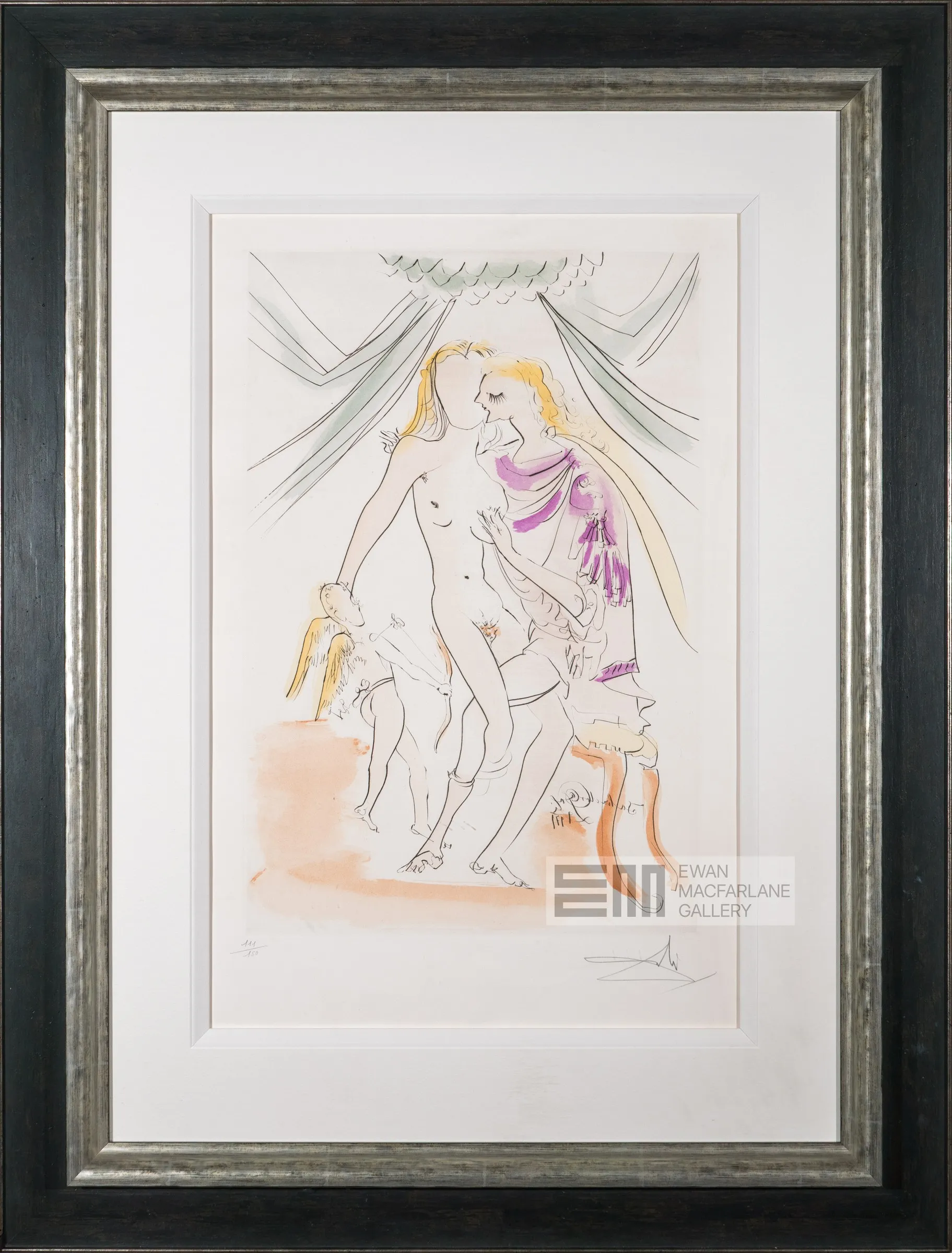
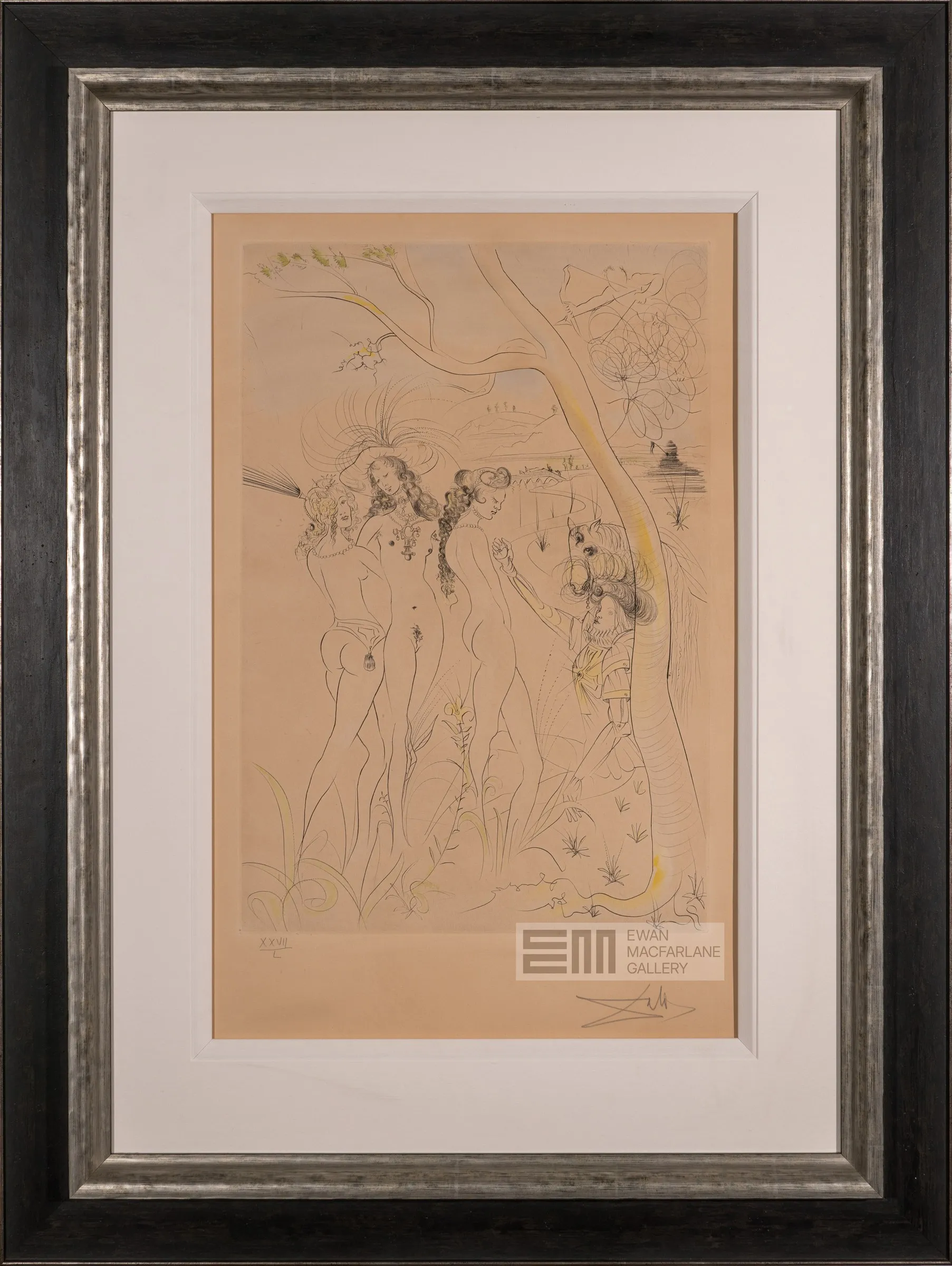
Salvador Dalí: Life and Work
Early Life and Artistic Development
Born in Figueres, Catalonia, in 1904, Salvador Dalí grew up surrounded by a landscape that would remain central to his imagination. The rocky coastline, clear light and expansive horizons of the Costa Brava became recurring settings for his most extraordinary imagery.
In 1922, he began studying at the Real Academia de Bellas Artes de San Fernando in Madrid. There, his friendships with the poet Federico García Lorca and filmmaker Luis Buñuel brought him into contact with a generation reshaping Spanish cultural life. He experimented with Impressionism, Cubism and other modern approaches while developing the precise draughtsmanship that would distinguish his mature work.
Surrealism and the World of Dreams
Dalí became closely involved with the Surrealist movement in Paris in 1929. That year also marked his collaboration with Buñuel on the film Un Chien Andalou and his meeting with Gala, who became his wife, muse and a central presence in his life and art.
Drawing on psychoanalysis, Dalí explored the associations, desires and anxieties beneath everyday experience. He developed what he called the “paranoiac-critical method”: an approach that encouraged unexpected connections and multiple interpretations within a single image. A landscape might also suggest a face; a group of objects might resolve into an entirely different form.
His meticulous technique gave these improbable scenes a compelling sense of reality. Empty plains, sharply defined shadows and carefully rendered surfaces made the unfamiliar appear almost tangible.
Printmaking and Literary Inspiration
Printmaking offered Dalí another setting for his imaginative world. Through etching, drypoint and lithography, he explored subjects ranging from classical mythology and biblical stories to major works of European literature.
His illustrations for Dante’s Divine Comedy and Cervantes’s Don Quixote reveal his ability to respond to established narratives through a highly personal visual language. Figures dissolve into sweeping lines, familiar forms undergo unexpected transformations, and passages of delicate detail give way to expressive movement.
These works extend the concerns of his paintings while revealing the versatility of his drawing. Literature provided a starting point for images in which storytelling, symbolism and invention could unfold together.
Science, Faith and Later Work
During the 1940s, Dalí’s interests increasingly embraced classical painting, religious imagery and contemporary science. He lived in the United States from 1940 to 1948, developing his international reputation and working across a broad range of creative disciplines.
In the following decades, he pursued what he termed “nuclear mysticism”, bringing together spiritual subjects and ideas drawn from atomic physics. Bodies and objects appear suspended or separated into individual elements, suggesting a world whose apparent solidity conceals a more complex structure.
Paintings such as The Madonna of Portlligat and Christ of Saint John of the Cross reflect this meeting of faith, scientific curiosity and admiration for the Old Masters. His later experiments with optical effects and stereoscopic images continued his lifelong investigation of how we see and understand reality.
The Theatre-Museum and His Legacy
The Dalí Theatre-Museum opened in Figueres in 1974. Conceived by the artist as an immersive experience, it brought together painting, sculpture, installations and visual surprises within an environment shaped by his imagination.
Dalí died in Figueres in 1989. His legacy encompasses both the celebrated paintings that helped define Surrealism and an extensive body of drawings, prints, objects and collaborations. Across this varied output, his distinctive achievement was to give imagined worlds the clarity and conviction of things observed.
Enquiries
For more information about Salvador Dalí’s work and available artworks, please contact the gallery.