
Twentieth Century Modern Masters
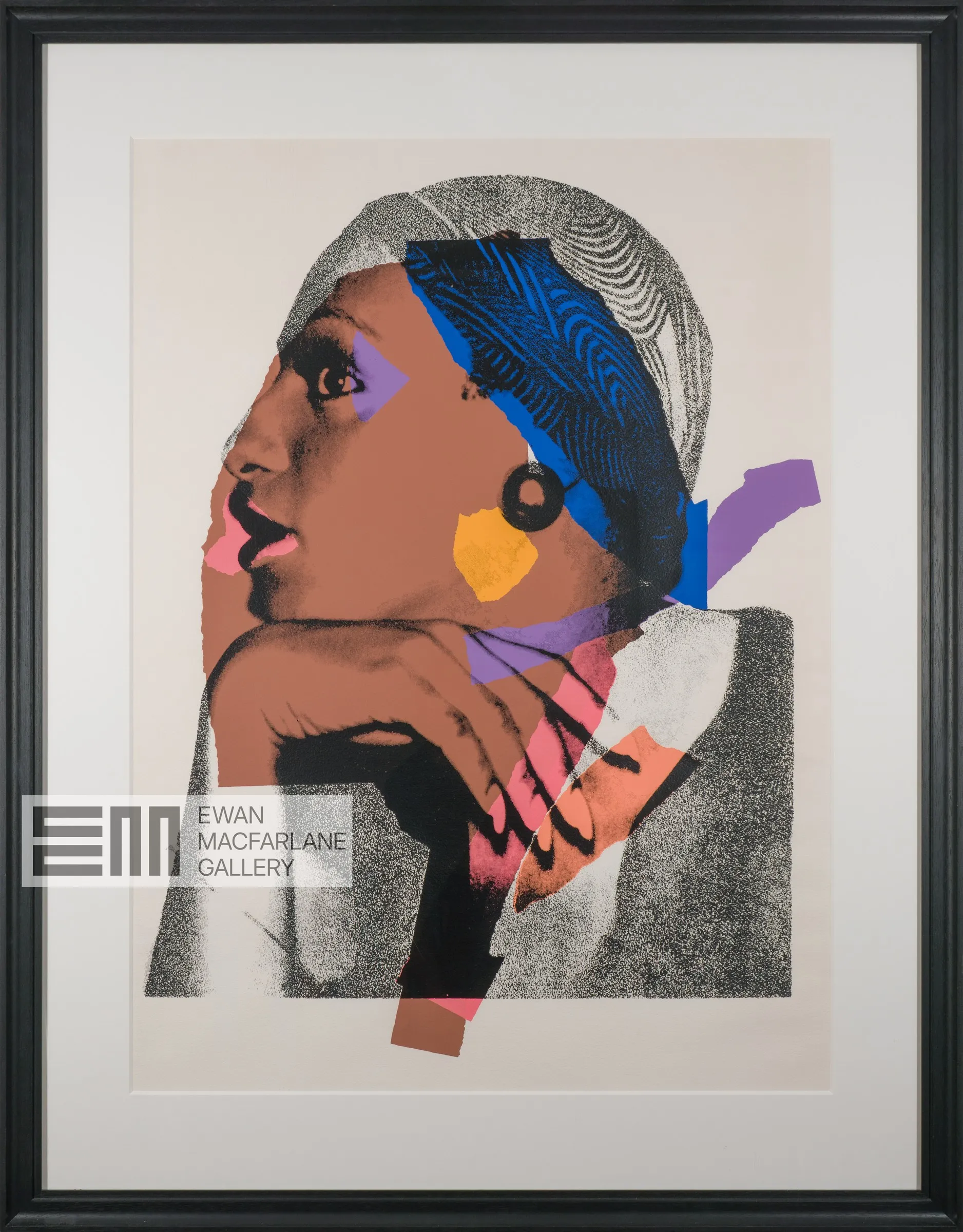
Ladies and Gentlemen (Wilhelmina Ross)
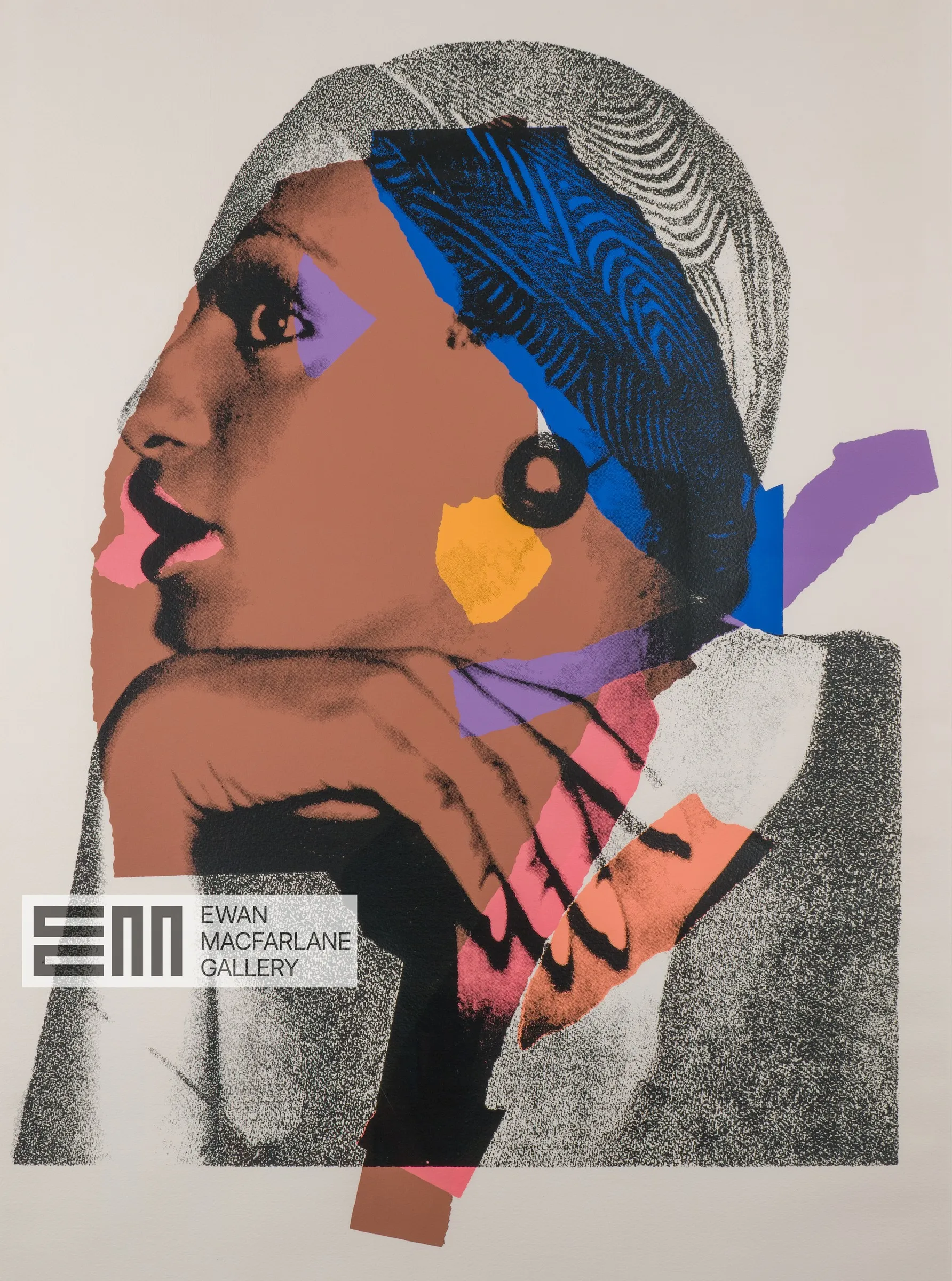
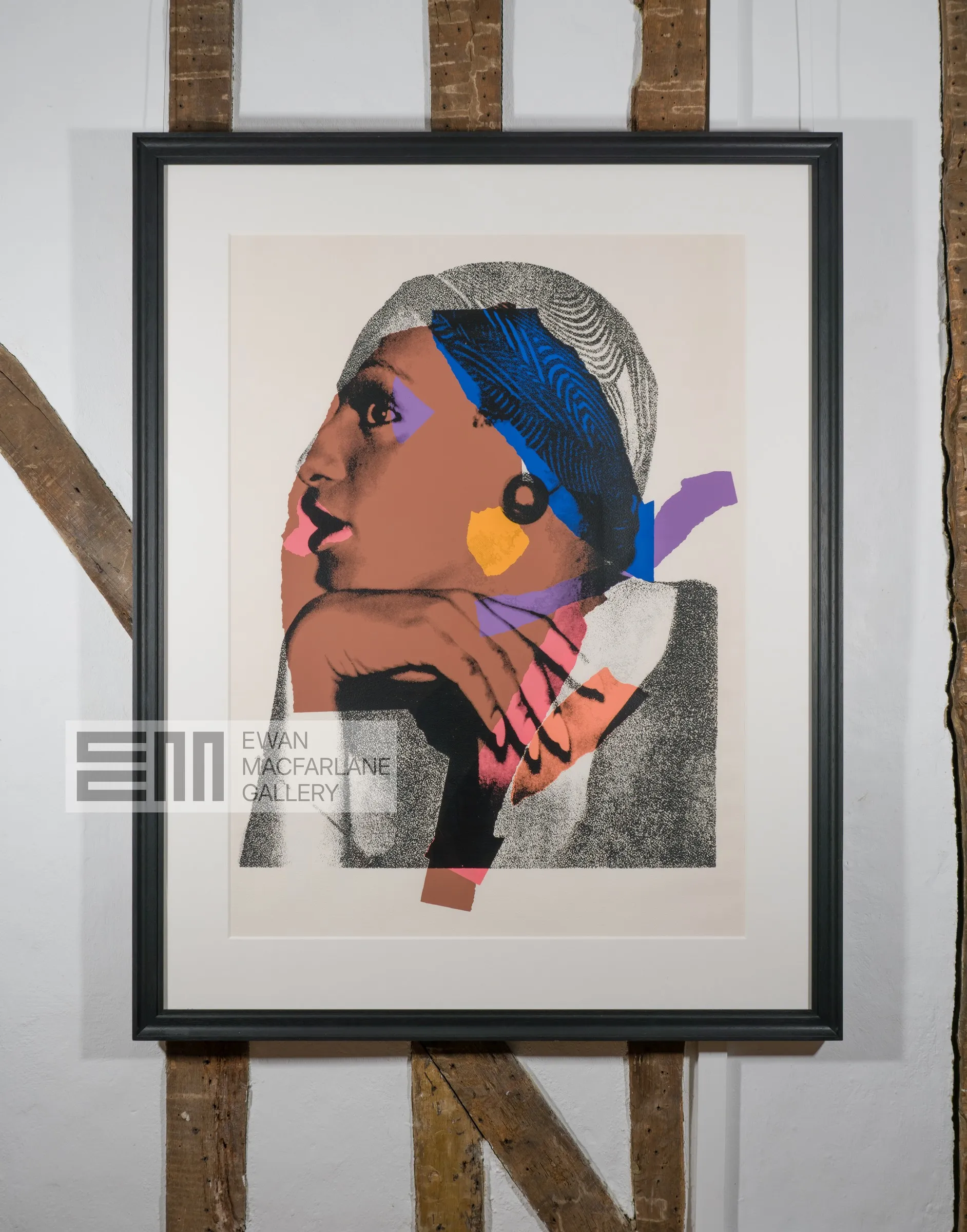
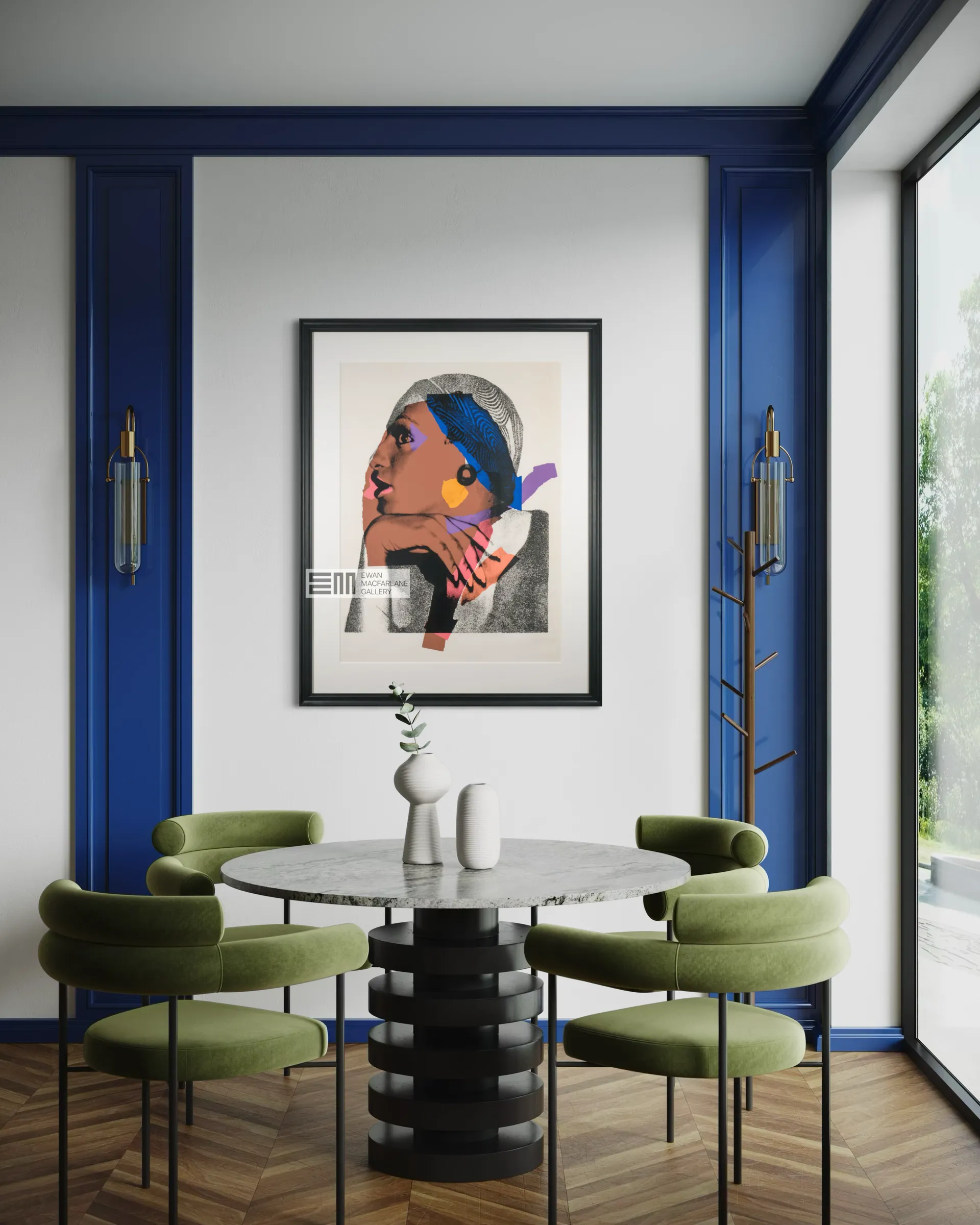
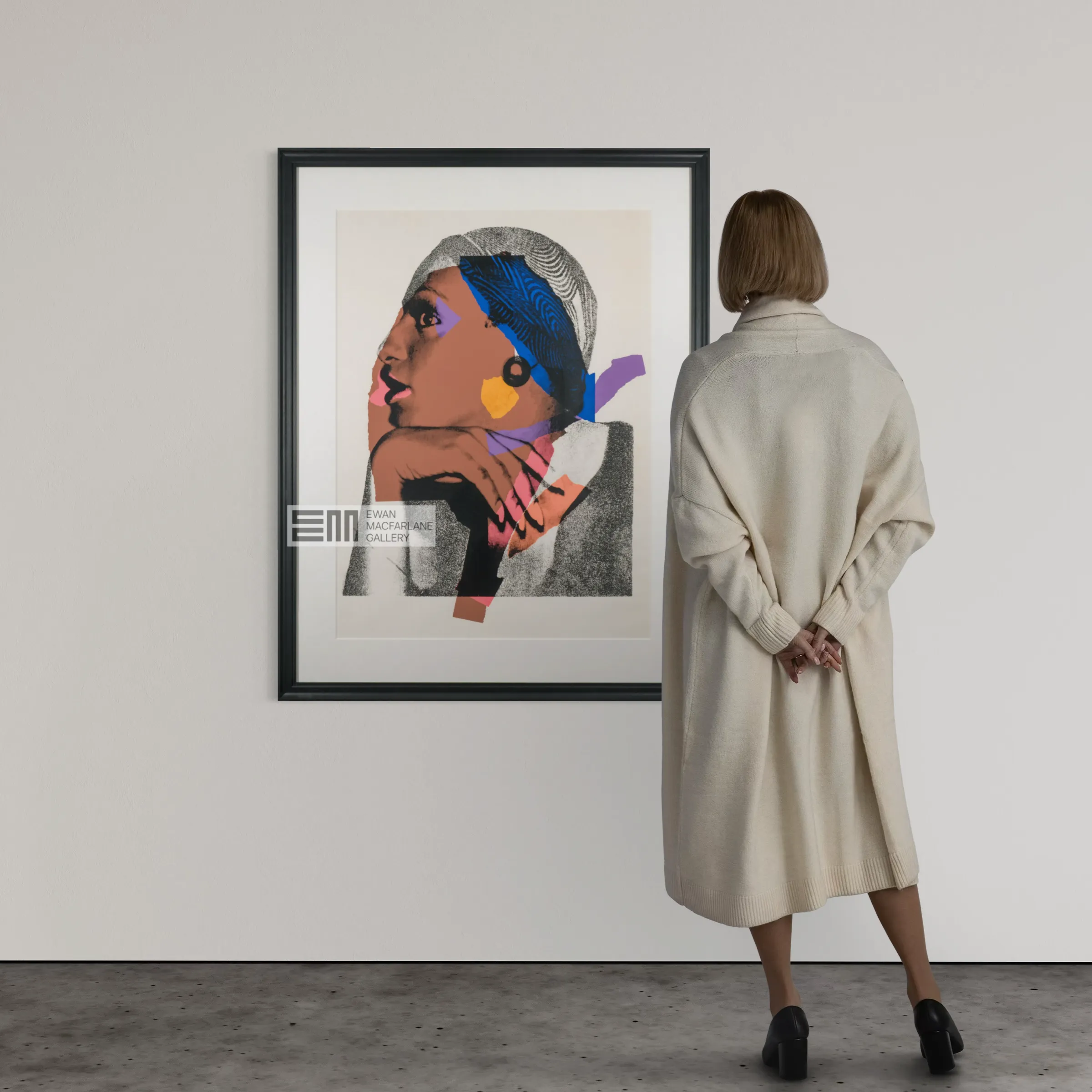
Wilhelmina Ross appears in poised profile, her chin resting on her hand as saturated passages of blue, violet, pink and ochre move across the photographic image. Warhol balances glamour with psychological presence: the emphatic silhouette and layered colour celebrate Ross’s carefully fashioned public persona while preserving the authority and individuality of her gaze.
Warhol began with a Polaroid photograph he took himself, then translated it through colour screenprinting into successive layers of photographic texture, flat colour and graphic contrast on Arches paper. Printed by Studio Heinrici in New York, the process turns the camera image into something deliberately constructed, allowing colour to shift across Ross’s face and clothing rather than merely describe them.
The cropped profile and supporting hand recall the conventions of celebrity portraiture, but Ross does not appear as a passive model: her controlled pose projects confidence, style and self-possession. Areas of bright colour interrupt the black-and-white image like make-up, light and collage, making performance and transformation part of the portrait’s meaning without obscuring the person at its centre.
Commissioned by the Italian dealer Luciano Anselmino, Ladies and Gentlemen grew from Warhol’s photographs of Black and Latin American drag performers and trans women recruited in New York, including from the Gilded Grape in Greenwich Village. The resulting paintings and ten-print portfolio were first presented in 1975 at the Palazzo dei Diamanti in Ferrara, bringing subjects then largely excluded from formal portraiture into the scale and visual language Warhol had used for celebrities.
Born Douglas Mitchell Hunter in Kansas City, Wilhelmina Ross moved to New York in 1970 and became a leading performer with Jimmy Camicia’s experimental drag theatre company Hot Peaches. Warhol returned to her image repeatedly across paintings, drawings and collages, making Ross one of the most extensively portrayed and recognisable sitters in Ladies and Gentlemen.
This large-format impression is numbered 110/125 and is signed, numbered and dated by Warhol in pencil on the reverse, placing it securely within the principal edition of one of his most important portrait portfolios. Its combination of strong provenance markers, substantial scale and identification as Feldman and Schellmann II.136 gives collectors a particularly well-documented example from the series.
“In the future everybody will be world-famous for fifteen minutes.”
— Andy Warhol
Why This Work Matters
At approximately 111 × 73 cm, the work has the physical presence of a major portrait while retaining the crisp surface and layered colour characteristic of Warhol's mature screenprints. The signed edition, exact catalogue identification, named sitter and central place of Ladies and Gentlemen in current scholarship combine to make this a compelling work for collections focused on Pop Art, portraiture and the representation of identity.
Catalogue Entry
- Artist
- Andy Warhol (1928–1987)
- Title
- Ladies and Gentlemen (Wilhelmina Ross)
- Date
- 1975
- Medium
- Colour screenprint on Arches paper
- Support
- Arches paper
- Signature
- Signed, numbered and dated 75 in pencil verso
- Edition
- 110/125; plus 25 artist's proofs and one printer's proof
- Sheet dimensions
- 110.7 × 73.3 cm (43⅝ × 28⅞ in)
- Printer
- Studio Heinrici, New York
- Publisher
- Luciano Anselmino, Milan
- Literature
- Feldman and Schellmann II.136, p. 91
- Exhibition history
- Palazzo dei Diamanti, Ferrara, 1975 (first exhibition of the Ladies and Gentlemen portfolio)
- Reference
- 429
£14,372
Available
Unframed sheet