
Contemporary
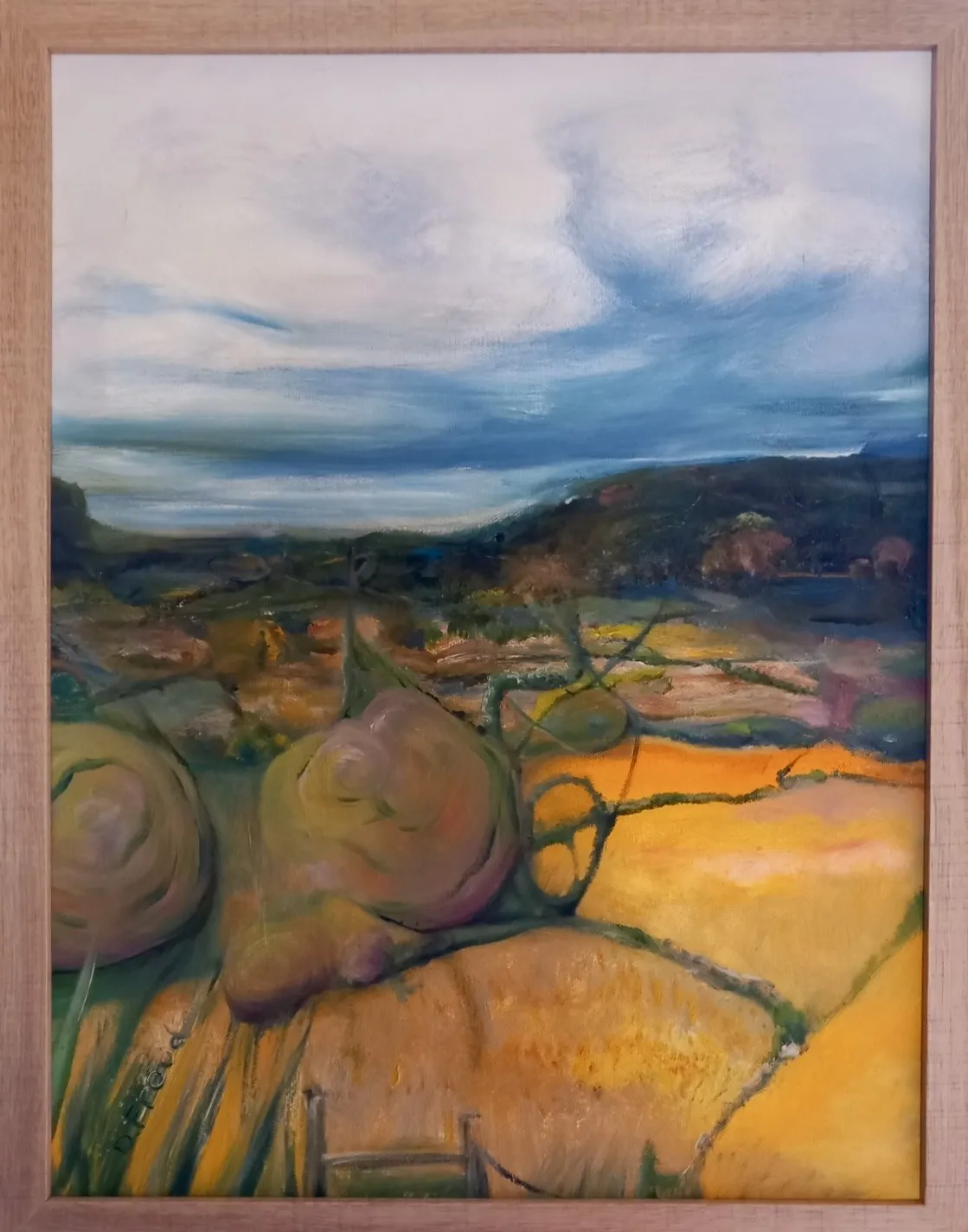
View from Cissbury
About the Work
In View from Cissbury, David Freud transforms the English countryside into a living, psychological terrain. Rolling forms merge with organic shapes that seem to breathe, suggesting the latent energy and personality of the land itself. The landscape is at once familiar and dreamlike: recognisable yet imbued with a sense of otherworldly presence.
Rendered in rich earth tones and luminous ochres, the painting evokes a deep connection between inner and outer worlds. The title’s reference to Cissbury, an ancient site near the South Downs, carries a sense of myth and memory. The work’s subtitle, Spirit of the Landscape, alludes to the Jungian concept of anima, the living, feminine essence of place, inviting the viewer to consider the land as a mirror of emotional and spiritual life.
Context within Freud’s Practice
David Freud’s surreal landscapes fuse realism with psychological allegory. Often described as “portraits of place”, his works reveal the spirit beneath the surface: not merely what the eye sees, but what the mind and intuition perceive.
Influenced by both the English landscape tradition and the visionary intensity of artists such as Samuel Palmer and Graham Sutherland, Freud’s paintings occupy a distinctive space between dream and observation. In View from Cissbury, the landscape becomes a sentient being, a union of nature and psyche, rooted in myth and personal reverie.
Collector’s Note
Freud’s landscapes resonate with collectors drawn to symbolism and psychological depth. View from Cissbury stands as a key example of his ability to render the intangible visible: a vision of landscape as consciousness itself. The painting’s fusion of sensual form and quiet mystery makes it both timeless and deeply contemporary.
Catalogue Entry
- Artist
- David Freud
- Title
- View from Cissbury
- Medium
- Oil on canvas
- Dimensions
- 48 x 38 cm (18 7/8 x 15 in)
- Reference
- 149
Sold
Full view